On The Futility Of War, Part One, Or, Snow Becomes A Lethal Weapon
We’re going to spend the better part of four years in the Italian Alps (or, to be more accurate, what was intended to be the Italian Alps), and by the time we’re done, nearly 400,000 soldiers will have been killed—and 60,000 of those will have died as a result of avalanches that were set by one side or the other.
In the middle of the story: a mountaineer and soldier who was so highly regarded that even those who fought against him accorded him the highest honors they could muster, creating a legend that lives on to this very day.
And even though a young Captain Erwin Rommel fought in these battles...it’s not him.
Oh, by the way: did I mention that there are also some handy object lessons for anyone who might be thinking about fighting a war in Afghanistan?
Well, there are, Gentle Reader, so follow along, and let’s all learn something today.
"Coming back from a long weekend in the desert, traffic is lousy. Next to the highway, an electric billboard proclaims ONLY 24 SUNSETS UNTIL CHRISTMAS and I am stuck beside it long enough to watch it change to 23--get 'em while they're hot, apocalypse coming soon, reserve your sunsets now while supplies last."--Gabriel Wrye, "Straight Time"
Location, Location, Location
Let's begin the setup for this story by checking out some prime European real estate:
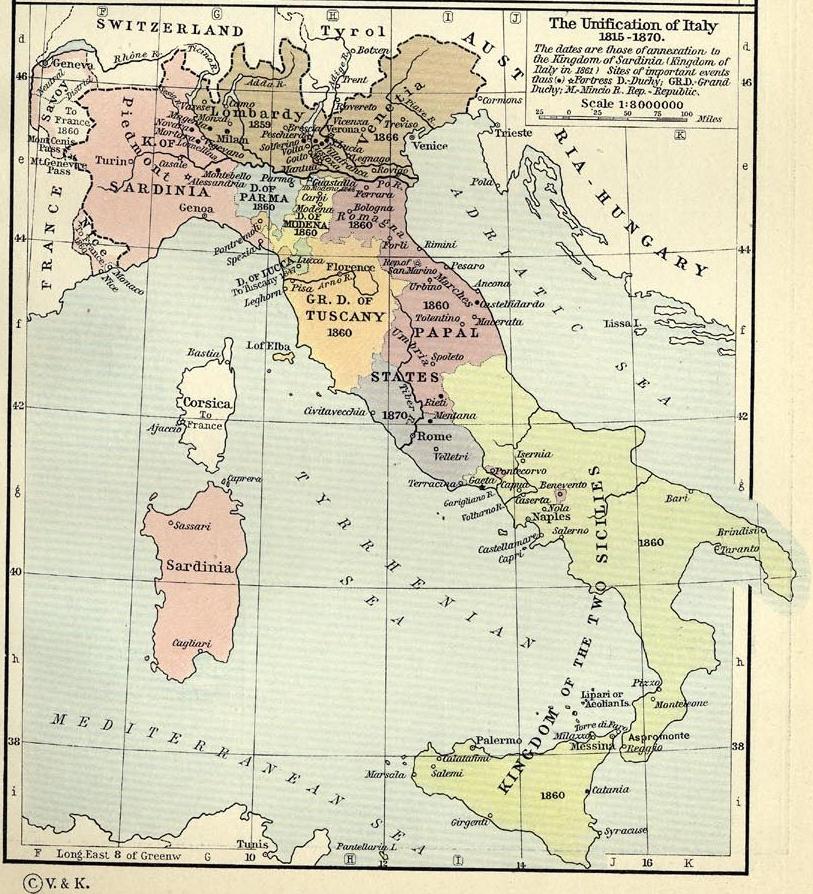
Italy, as you know, is that "boot" protruding into the Mediterranean--and if the top of the boot had really cool trim and a big buckle, the trim would run from Nice, France (formerly Nice, Italy), on the west, touching Innsbruck and Salzburg, Austria, and then past Bratislava, Slovakia and on into the Hungarian plain. The trim would also veer south, and that portion of our metaphorical "carnival decoration" would encompass Ljubljana, Slovenia (which is about 100 miles south of Salzburg), eventually rolling out into the suburbs of Zagreb, Croatia.
Other notable nearby cities include Marseilles, Grenoble, every city in Switzerland, Strasbourg, Munich, Venice, Bologna, Milan, Turin, and Genoa, all of which are 100 miles or less from the boot's appliqué.
This is the Alps, and, in 1910, France, Switzerland, Italy, Germany, and the Austro-Hungarian Empire all have borders that snake through the area. The last three were all relatively new countries, none having gone more than 50 years since their most recent versions of "unification"--and that buckle we spoke of earlier? That would be roughly where the Swiss, Austrian, and Italian borders meet today, near the Stelvio Pass...which is part of an area known as the Tyrol.

Switzerland's Matterhorn (part of the Pennine Alps) is one of numerous mountains that are all above 10,000 feet over on the west side of the region; the highest peak of the equally spectacular Tre Cime di Lavaredo (known in German as the "Drei Zinnen") is located about 10,000 feet up in the air, a couple of hundred miles or so to the east in the Dolomite Range.
Just like in my part of the world (Washington's Cascade Mountains) you can get a lot of snow up there, and the combination of extreme snow and weather, high altitudes, and nearly vertical climbs created, by necessity, residents with unique mountaineering skills (the techniques that led to the use of pitons, carabiners, and rope ascents and descents were all developed here)...skills that became quite valuable to the military authorities in those five countries.
Mountaineers Become Soldiers
By the start of the 20th Century, troops like the Italian Alpini (who, to this day, still serve in the Italian Army), the French Chasseurs Alpines (who are also still serving and have a recruiting pitch that's way past "Be All You Can Be"), the Austrian Landesschützen (who also have a modern presence in today's Austrian Armed Forces as the 6th Jägerbrigade and the Österreichs Gebirgsbrigade, mountain infantry and "mountain combat engineers", respectively), and the "Standschutzen", who were essentially the Austrian military's Alpine "farm team", were all stood up to protect the various national interests that were present in the mountains.
All of the armies and militias involved had access to the best hunters and mountain guides that could be found--and since smuggling and poaching was part of mountain life, a lot of people knew a lot of paths, knew how to bag game with the fewest shots possible--and knew how to use those skills while keeping out of sight of the flatlanders and tourists--and "revenooers"--who might be venturing into the neighborhood.
Among all those mountain dwellers, perhaps the most skilled of the hunters and guides was Sepp Innerkofler. As the new century began, he had built his decade-old guide business into a hotel business--presumably learning better "customer service" that that practiced by his equally famous uncle Michael, who would apparently leave customers on ledges to wait for him to finish a climb if they couldn't keep up. (Michael died in 1888, the victim of an ice bridge collapse.)
One measure of Sepp's skill: he had to his credit the "first ascent" up more than 50 of the most difficult peaks in the Alps--which wasn't that easy, considering that Michael had something like 10 times that number under his belt.
"...only a few of the hundreds of walkers who leave the Longéres pass for the Lavaredo pass every day in summer and autumn realise [sic] that they are moving in an environment which was made sacred by events in the Great War..."--Tito and Camillo Berti, "Guerra in Ampezzo e in Cadore"
I could tell you an entire additional story about Italy and the relationship with Austria (and later Austro-Hungary, both ruled by the Hapsburg Dynasty), but what you need to know today is that over the centuries there had been a long-simmering conflict between the Italians and the Austrians (and the Ladins, a third ethnic group that inhabits the Tyrol).
At the time of the American Civil War Austria's territory extended a bit south of the Alps; and part of the beginning of Italian unification history (the "Risorgimento") was the effort to reduce Austrian influence in the north of today's Italy and in the Italian Tyrol.

As Europe was stumbling its way into World War I, much of Italy's population wanted to stay neutral (which, for the moment, was official Government policy), and some did not, seeking, instead, an alliance between Italy and the Austro-Hungarian Empire.
Opposing the Empire was the Rebel Alliance...no, wait, that was "Star Wars".
The actual opponents, Russia, France, and Great Britain, were known as the "Triple Entente", which was the side the United States later joined. Germany eventually declared war against everyone in Europe, except the "neutral" countries and the other "Central Powers" (Austro-Hungary, Bulgaria, and the Ottoman Empire--which, like the show "Cats", was just about to close after a very successful 600-year run), who they joined.
By the time it was all over, more than 50 declarations of war were issued by the various combatant nations.
Trouble In The Neighborhood
It's now 1915, and despite the fact that Italian policy tilts toward neutrality, Sepp Innerkofler has been seeing a lot of new activity in his neighborhood...and the alp-glow notwithstanding, he was pretty sure that it wasn't the mythical King Laurin.
You cannot sustain an army in the mountains without a lot of infrastructure in place, especially a large one, and what Innerkofler was seeing was indeed the beginning of Italian military preparations--preparations that were being countered, as best as possible, by the Austrian military:
"The Italian Alpinis, as well as their Austrian counterparts...occupied every hill and mountain top and began to carve whole cities out of the rocks and even drilled tunnels and living quarters deep into the ice of glaciers like the Marmolada. Guns were dragged by hundreds of troops on Mountains up to 3 890 m (12,760 feet) high. Streets, cable cars, mountain railways and walkways through the steepest of walls were built."--From the article "Tyrol", courtesy of the Embassy of Austria
And as it turns out, the Italians were going to need every bit of army they could get...because for a piece of the action, including some Alpen territories, the Italians had agreed, in the until now secret Treaty of London, to fight on the side of the Triple Entente powers--but in order to win the Tyrol...well, they were going to have to win the Tyrol; a task which will require the Italian Army to fight their way through either the Dolomites, on the one side, or the Julian Alps on the other...or both.
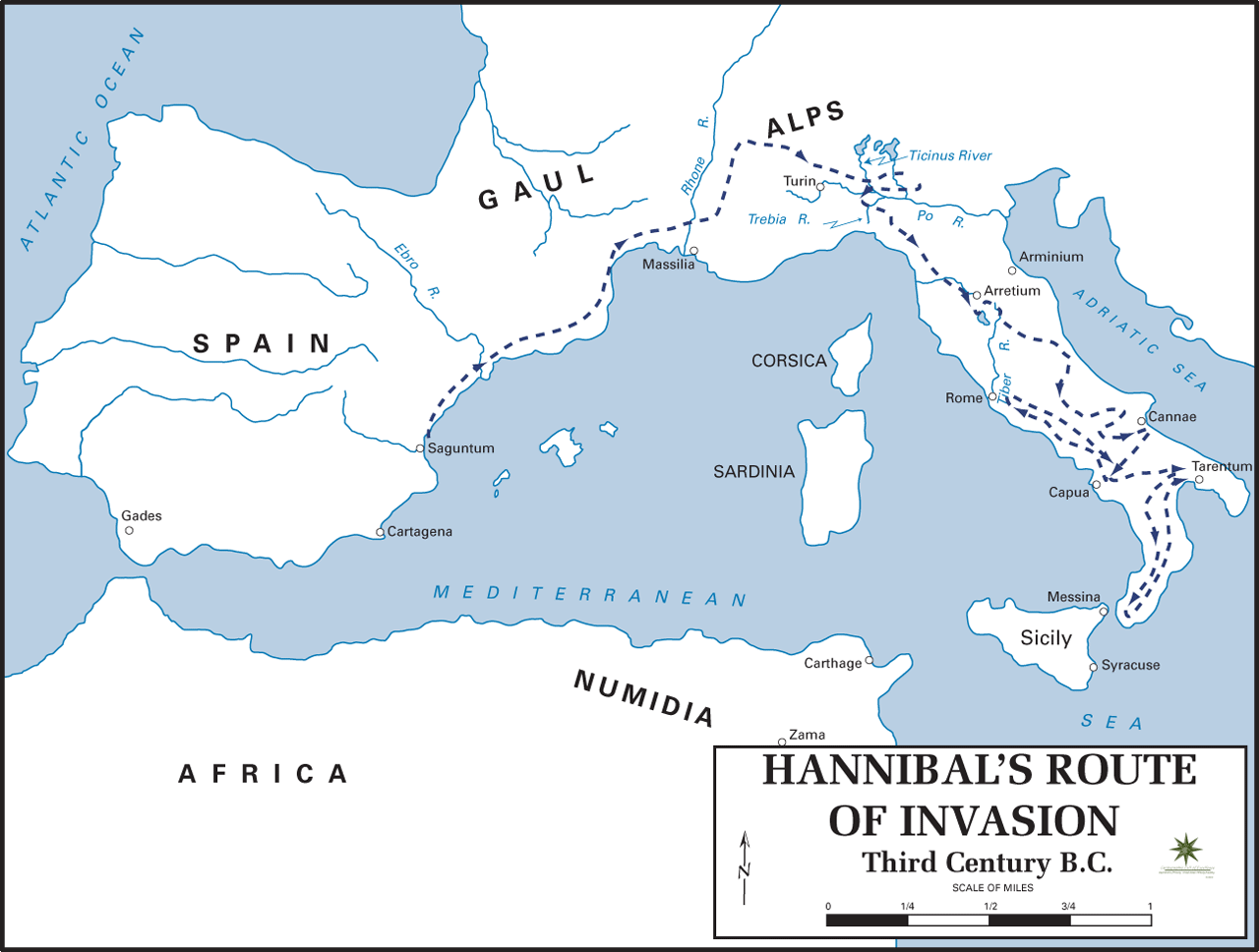
Hannibal had accomplished a similar task on the eastern side of the Alps--2200 years before--but to do it he left a huge portion of his Carthaginian forces dead in those mountains; victims of both the ancient angry mountain soldiers (the forebears of the same mountain folk Innerkofler lived among in 1915) and the brutal winter conditions.
The Italian commander, General Luigi Cadorna, had 875,000 troops at his disposal on May 23, 1915 (the day the Italians declared an end to their neutrality); against him the Austrians could only field about 300,000 troops--but many of those troops were natives defending their own real estate...and for the moment, they held the strategic real estate on the tops of the mountains.
Remember the description we gave in the beginning about the boot's appliqué?
The smart thing to do, if you're commanding 875,000 troops trying to go north, is to get around the right edge of the fringe on that boot (the mountains are somewhat lower on that side) and get your people onto the Hungarian plain...which is nice and flat and provides lots of room to maneuver.
The problem is, if you get too committed to that plan, you may end up with Austrian troops in Milan, attacking you from the rear. To prevent such an occurrence, Cadorna attacked on an offensive line that stretched from the "buckle" of our boot, way up in the Alps, to the city of Gorizia, which is all the way over to the top and right, if you were looking at a modern Italian map--and which just happens to be on the way to the nearby Adriatic port city of Trieste.
If you then follow the route of today's A1 and A2 highways you get to Zagreb...and that's the way to the Hungarian Plain.
If you can succeed in advancing uphill past Lake Garda (the Lago di Garda, in Italian, and the first part of the route up to the buckle), then you can cut off the railroad from Trentino north to Innsbruck; this would prevent the Austrians from moving any troops into northern Italy.
It's time for us to stop for today: we have a lot of story to go, this is a natural point to take a break, and, to be completely honest, 4,000 words is too much even if you're trapped in your car on the New York Thruway with nothing but a Snuggie, a laptop, and a mobile Internet service provider.
When we come back tomorrow we'll get to the story of what happened when Italy deployed their newly enlarged Army, which is a story that, in some ways, is still being told; additionally, the idea that there is a lesson here for those who are being tasked with executing a war strategy in Afghanistan will be explored.
Harmony and balance matter in life, so go watch some Johnny Bravo or something, clear your head of all of this, and we'll all meet back here tomorrow for Part Two.
| < Brian Baird Quits! Good Riddance. | Sherry Appleton Gets It: Legalize Marijuana > |
PNW TOPIC HOTLIST

Recommended Diaries
- State Budget Craters By $2 Billion More. The Good News Is....
... Now Progressives are going to have to stop talking about tax hikes and start talking about the value of government.
By dlaw (20 comments) - Why Aren't We Fighting for a State Income Tax?
I am getting really tired here: I've been asked to sign petitions and send emails by almost any advocacy group that
By ktkeller (25 comments) - We Want to Take You and We Will Nyah Nyah
Last week I'm watching a podcast of Monday's House Local Government and Housing Committee because I'm interested in the Executive Session
By ktkeller (8 comments) - Online Voting Rights for Overseas Military Personal
Having been deployed during an election I have some very passionate views on this issue. I have seen my friends simple
By dorsolplants (20 comments) - A Modest Proposal: How to Cut Education Funding
As cited in a recent Seattle P-I article, Sen. Rosemary McAuliffe, chairwoman of the state Senate education committee, warned that budget
By OrneryDemocrat (6 comments) - Federal judge calls 3-strikes "cruel and unusual"
[Front paged: NM]As seen in a DailyKos diary posted yesterday, a Ninth Circuit federal appeals court struck down a 28-years-to-life sentence
By N in Seattle (5 comments)
Recent Diaries
By dlaw (5 comments)
By chadlupkes (0 comments)
By dlaw (0 comments)
By jamesboyce (0 comments)
By Farcaster (6 comments)
By eridani (0 comments)
By eridani (0 comments)
By dlaw (7 comments)
By m3047 (0 comments)
By eridani (1 comments)
By dlaw (3 comments)
By dlaw (2 comments)
Related Links
+ Straight Time+ really cool trim
+ Italy
+ carnival decoration
+ Italy [2]
+ Germany
+ Austro-Hun garian Empire
+ Stelvio Pass
+ Tyrol
+
+ Matterhorn
+ Tre Cime di Lavaredo
+ lot of snow
+ pitons
+ carabiners
+ Alpini
+ still serve
+ Chasseurs Alpines
+ recruiting pitch
+ Landessch& #252;tzen
+ 6th Jägerbrigade
+ farm team
+ Sepp Innerkofler
+ Michael
+ wait for him
+ 50
+ Guerra in Ampezzo e in Cadore
+ Hapsburg Dynasty
+ Ladins
+ south
+ Risorgimen to
+ [2]
+ did not
+ alliance
+ everyone
+ Cats
+ 600-year run
+ 50 [2]
+ King Laurin
+ sustain
+ infrastruc ture
+ military preparations
+ "Tyrol"
+ Treaty of London
+ Julian Alps
+ similar task
+ angry mountain soldiers
+ attacked
+ buckle
+ Gorizia
+ Lake Garda
+ Johnny Bravo
+ fake consultant's Diary
Washblog RSS Feeds
Political Contacts
Local Media
 Coastal/Grays Harbor
Aberdeen Daily World
Chinook Observer
Montesano Vidette
Pacific County Press
Willapa Harbor Herald
KXRO 1320 AM
Olympic Peninsula
Peninsula Daily News
Bremerton Sun
Bremerton Chronicle
Gig Harbor Gateway
Port Orchard Independent
Port Townsend Leader
North Kitsap Herald
Squim Gazette
Central Kitsap Reporter
Business Examiner
KONP 1450 AM
Sound and Islands
Anacortes American
Bainbridge Review
Voice Of Bainbridge
San Juan Journal
The Islands' Sounder
Whidbey NewsTimes
South Whidbey Record
Stanwood/Camano News
Vashon Beachcomber
Voice Of Vashon
KLKI 1340 AM
North Puget Sound
Bellingham Herald
The Northern Light
Everett Herald
Skagit Valley Herald
Lynden Tribune
The Enterprise
Snohomish County Tribune
Snohomish County Business Journal
The Monroe Monitor
The Edmonds Beacon
KGMI 790 AM
KELA 1470 AM
KRKO 1380 AM
Central Puget Sound
King County Journal
Issaquah Press
Mukilteo Beacon
Voice of the Valley
Federal Way Mirror
Bothell/Kenmore Reporter
Kirkland courier
Mercer Island Reporter
Woodinville Weekly
Greater Seattle
Seattle PI
Seattle Times
KOMO TV 4
KIRO TV 7
KING 5 TV
KTBW TV 22
KCTS 9
UW Daily
The Stranger
Seattle Weekly
Capitol Hill Times
Madison Park Times
Seattle Journal of Commerce
NW Asian Weekly
West Seattle Herald
North Seattle Herald-Outlook
South Seattle Star
Magnolia News
Beacon Hill News
KIRO 710 AM
KOMO AM 1000
KEXP 90.3 FM
KUOW 94.9 FM
KVI 570 AM
South Puget Sound
The Columbian
Longview Daily News
Nisqually Valley News
Lewis County News
The Reflector
Eatonville Dispatch
Tacoma News Tribune
Tacoma Weekly
Puyallup Herald
Enumclaw Courier-Herald
The Olympian
KAOS 89.3 FM
KCPQ 13
KOWA FM 106.5
UPN 11
Cascade/Okanogan
Ellensburg Daily Record
Levenworth Echo
Cle Elum Tribune
Snoqualmie Valley Record
Methow Valley News
Lake Chelan Mirror
Omak chronicle
The Newport Miner
Spokane/Palouse
The Spokesman-Review
KREM 2 TV Spokane
KXLY News 4 Spokane
KHQ 6 Spokane
KSPS Spokane
Statesman-Examiner
Othello Outlook
Cheney Free Press
Camas PostRecord
The South County sun
White Salmon Enterprise
Palouse Boomerang
Columbia Basin Herald
Grand Coulee Star
Walla Walla Union-Bulletin
Yakima Herald-Republic
KIMA 29 Yakima
KAPP TV 35 Yakima
KYVE Yakima
Wenatchee World
Tri-City Herald
TVEW TV 42 Tri-cities
KTNW Richland
KEPR 19 Pasco
Daily Sun News
Prosser Record-Bulletin
KTCR 1340 AM
KWSU Pullman
Moscow-Pullman Daily News